

ramoparadmin
About ramoparadmin
Posts by :




-Courtesy-of-the-artist.jpg "Tuan-Andrew-Nguyen-Portrait-of-a-Refuge-as-a-Refugee-II-2017-Inkjet-on-photo-paper-(stills-from-short-film)-Courtesy-of-the-artist")

GLITCH – La Vida Después del Calentamiento Global




GLITCH:
LA VIDA DESPUES DEL
CALENTAMIENTO GLOBAL
Edgardo Aragón
April 23 · 2021 | July 16 · 2021





That which we love will end up being our ruin


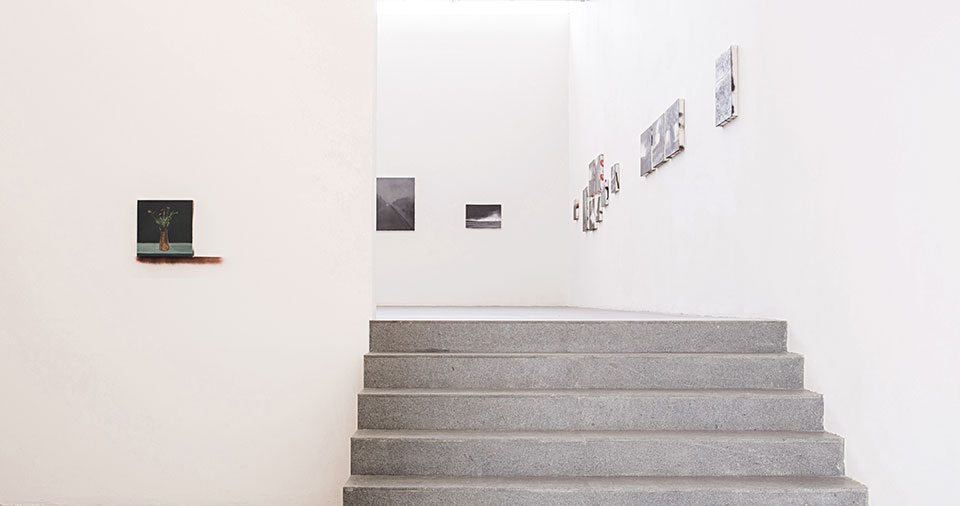


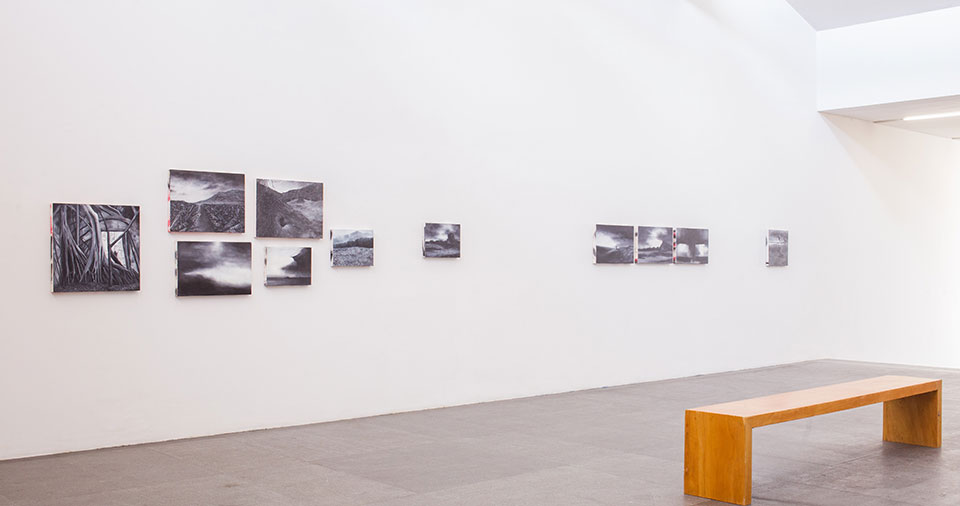

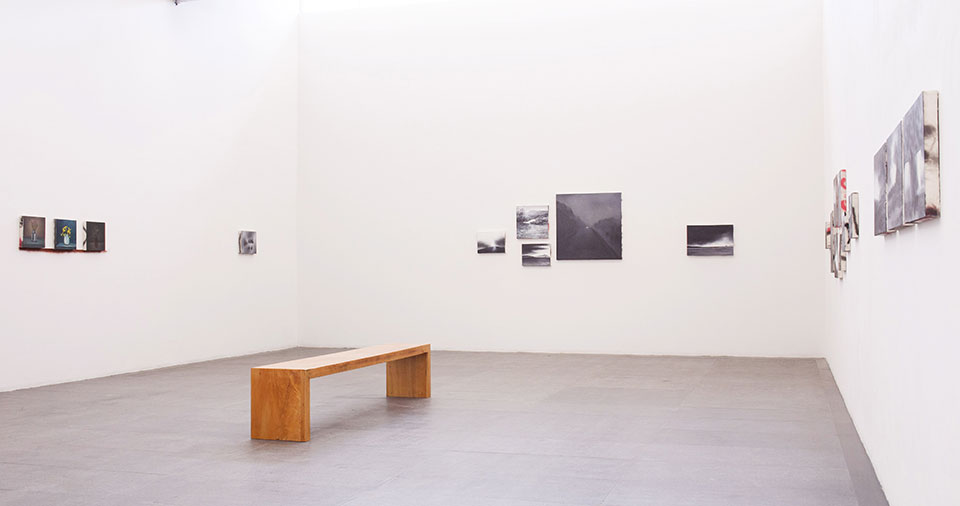
THAT WHICH WE LOVE
WILL END UP BEING OUR RUIN
José Jiménez Ortiz
November, 2020 | July 16, 2021
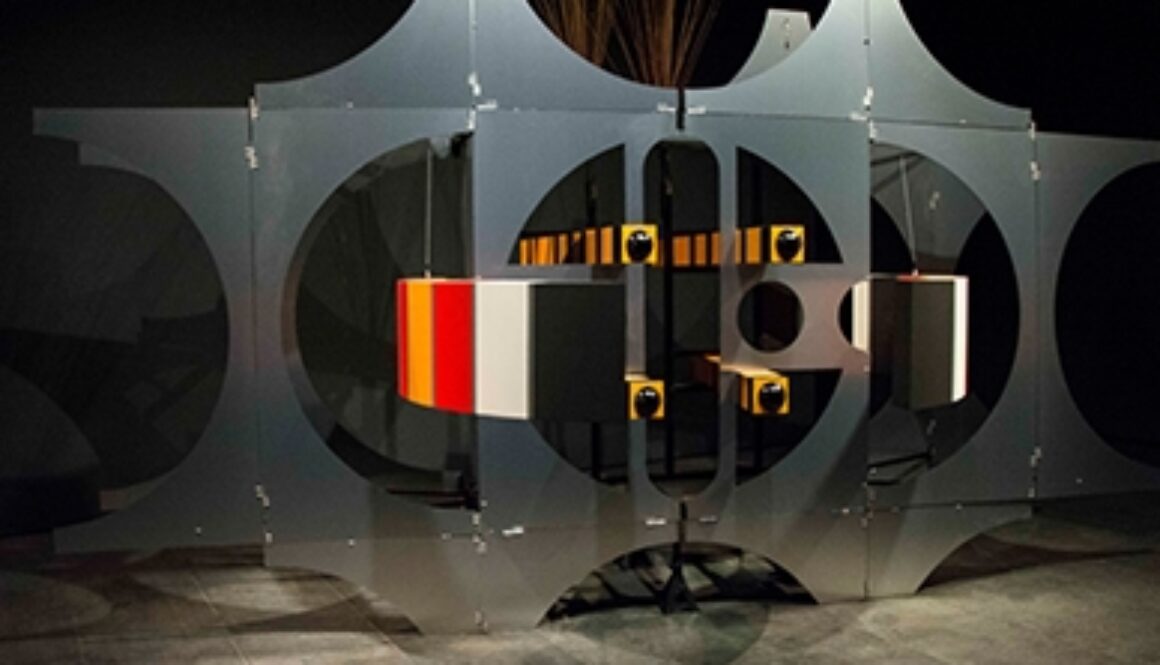
“The love machine” at MUAC



THE LOVE MACHINE
MUAC
Manuel Felguérez & Páramo
February 28, 2020
“THE LOVE MACHINE” | MEXICO CITY
Museo Universitario de Arte Contemporáneo (MUAC)
A collaboration between Manuel Felguérez and Páramo.
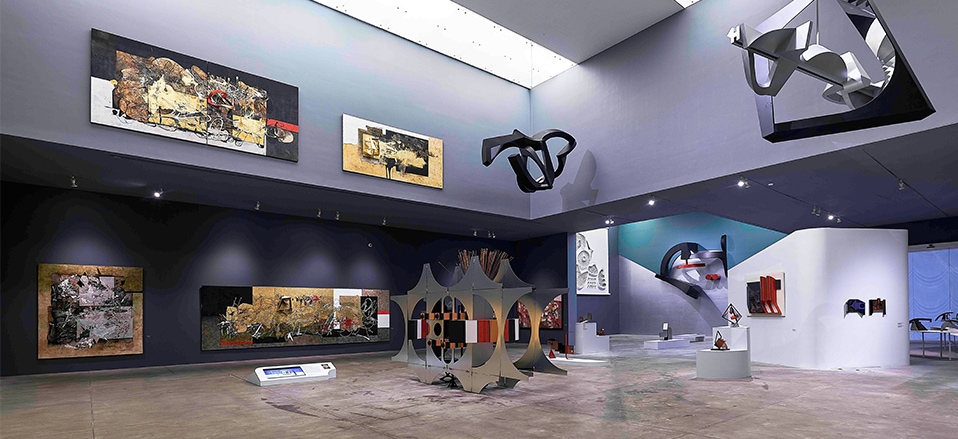
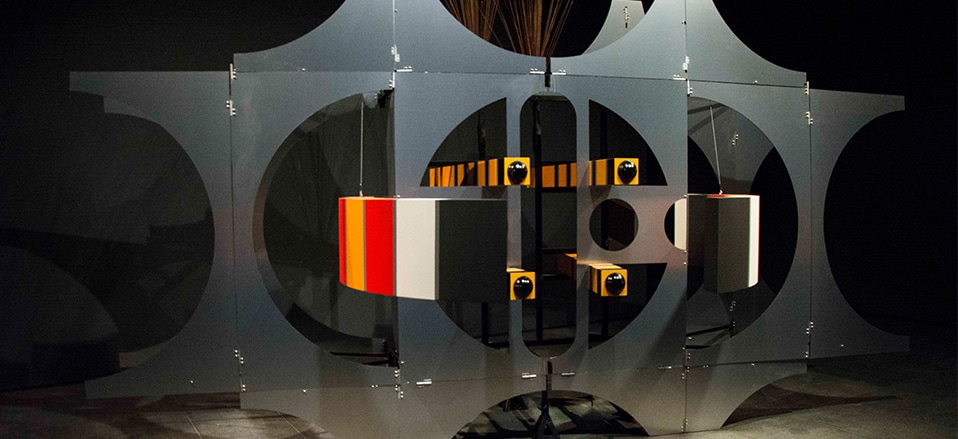
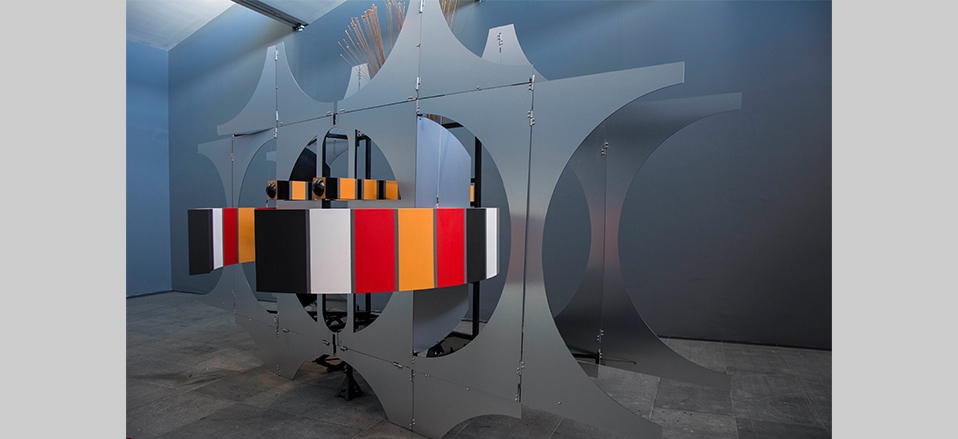
Páramo is honored to participate in Trajectories, the exhibition presented by Museo Universitario de Arte Contemporáneo (MUAC) to celebrate the life and work of Manuel Felguérez (Zacatecas, 1928), a key figure in the development of contemporary art in Mexico. Under the artist’s supervision, Páramo built a reproduction of La máquina del deseo [The love machine], now exhibited at MUAC, in Mexico City.
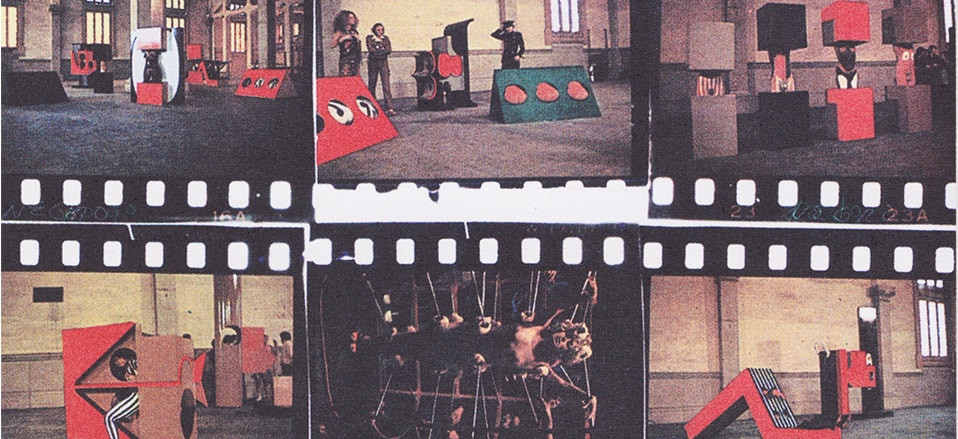
The original piece was built in 1973 by Felguérez as a request from chilean artist, writer and filmmaker, Alejandro Jodorowsky, who used it for his cult film La Montaña Sagrada [The Holy Mountain]. It was a mobile piece with a geometric structure which functioned in the movie as a transgressive device. Both the machine and its mockup were lost after the shooting.
La máquina del deseo was reactivated 45 years later –for the first time in Mexico– for its presentation at Felguérez solo exhibition at Páramo, in March 2018. Enrique Nuño, museographer and artist (member of Gabinete Homo Extraterrestre), designed the new mockup and built the piece’s reproduction in collaboration with Astrid Abbadie.
In a conversation with Pilar García, the curator of Trajectories, Felguérez explains the context in which he created the original piece. Jodorowsky had conceived an “art factory” for the movie and he commissioned the mexican plastic artist to create a fake art collection. Later came the invention of La máquina del deseo, as Felguérez himself recounts:
“We had an American model who had come to do the film and he said, ‘Man, why don’t you have this beautiful woman turn a machine on?’ ‘What should we do?’ ‘Whatever you want,’ he said. He was very laid-back, he trusted me. But we didn’t have the money or the parts to make a kinetic machine—kineticism was in vogue at the time. The idea was to build a machine that would start off as a cube, and as it was turned on by a plastic phallus, it would get bigger. Since we didn’t have the motors to make this happen, the crew formed part of the device. ‘Come on guys, move this piece, raise it up’. A group of six or seven strong men began to do all the movements by hand. And so we went from a machine that got bigger on its own to doing everything by hand. Everything was plastic. I made a model out of cardboard boxes, to see how it would transform. All of the girl’s movements were directed by Alejandro, though. ‘Let’s see, move over here, turn around, now show off your body’. It was all directed by him, but it was based around the machine. It came first, and then the scene was built around it. To finish it off, there was a little machine that squirted water. The little machine came out from below and came all over the set. That’s the whole story. For us, it was pure laughter, pure fun […]’
Trajectories, by Manuel Felguérez, is open at MUAC from December 7, 2019 to May 10, 2020.
Images: MUAC, Páramo and The holy mountain 1-3: Views of Trajectories, MUAC, 2020 4-6: La máquina del deseo at Páramo, 2018 7-8: Stills from the film The holy mountain, by Alejandro Jodorowsky, 1973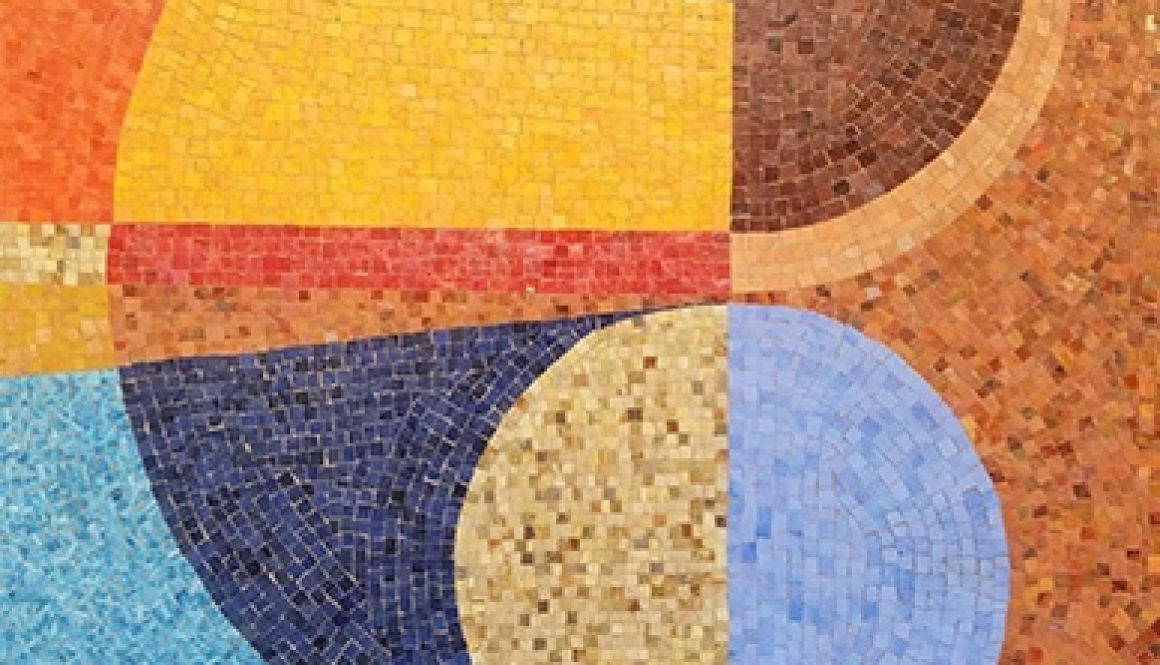
Bay Parkway Station

BAY PARKWAY STATION
BROOKLYN, NY
Eamon Ore-Giron
BAY PARKWAY STATION | BROOKLYN, NY Eamon Ore-Giron
Public art project commissioned by New York City Transit Authority
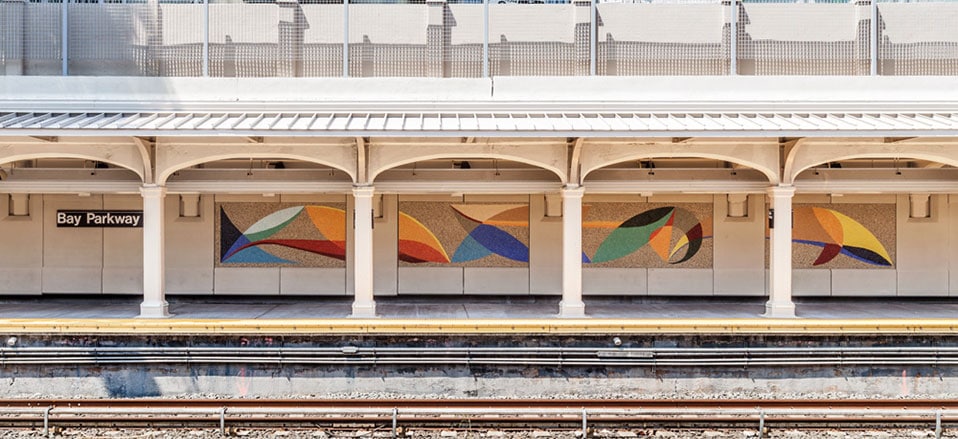
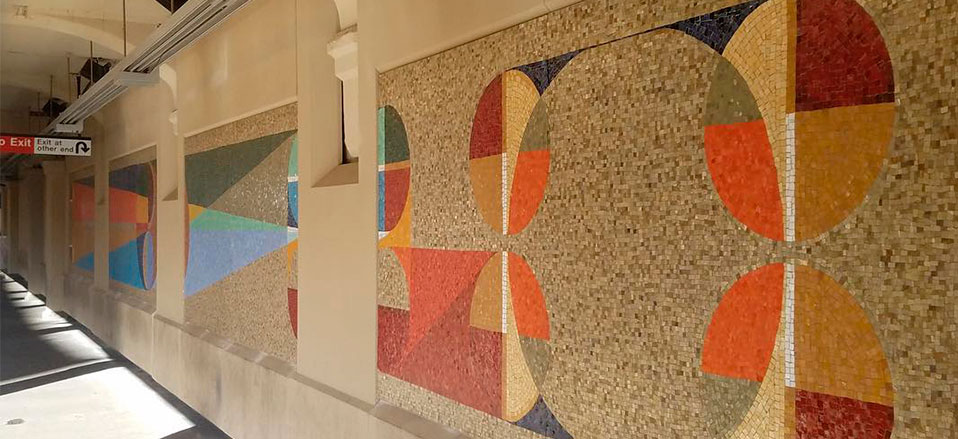
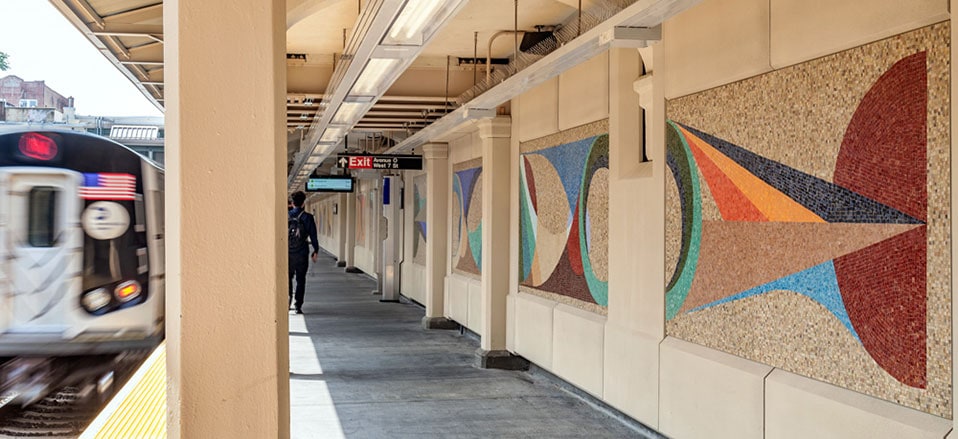
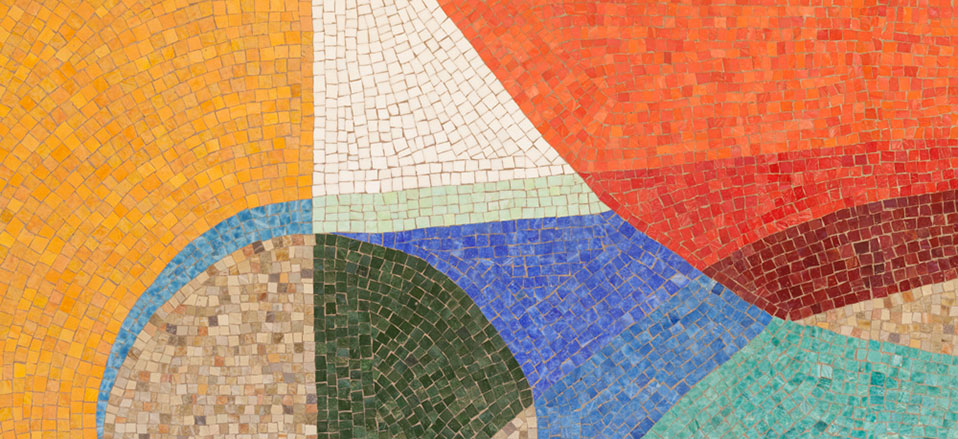
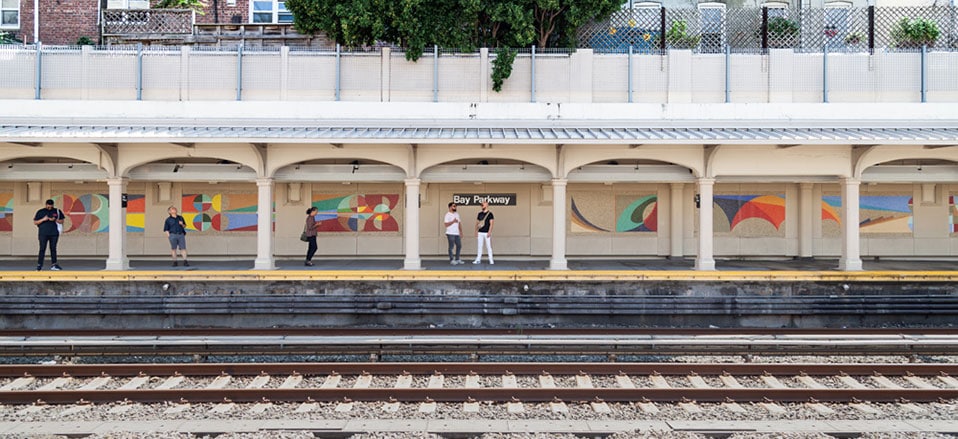
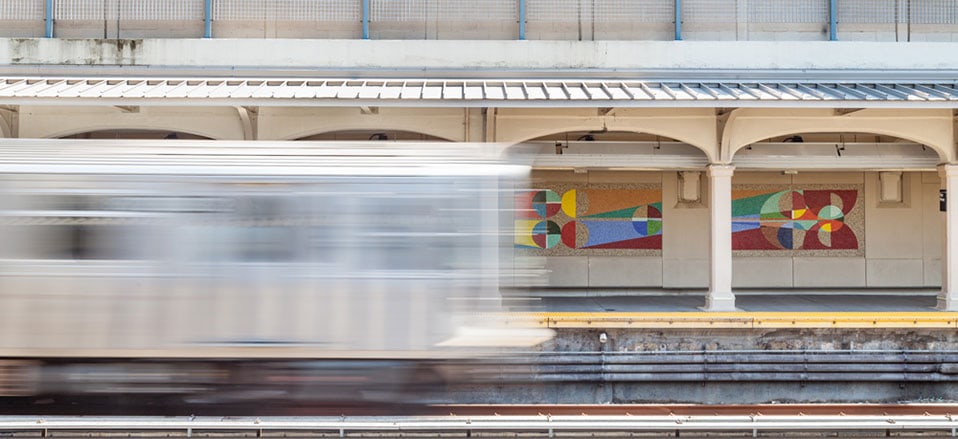
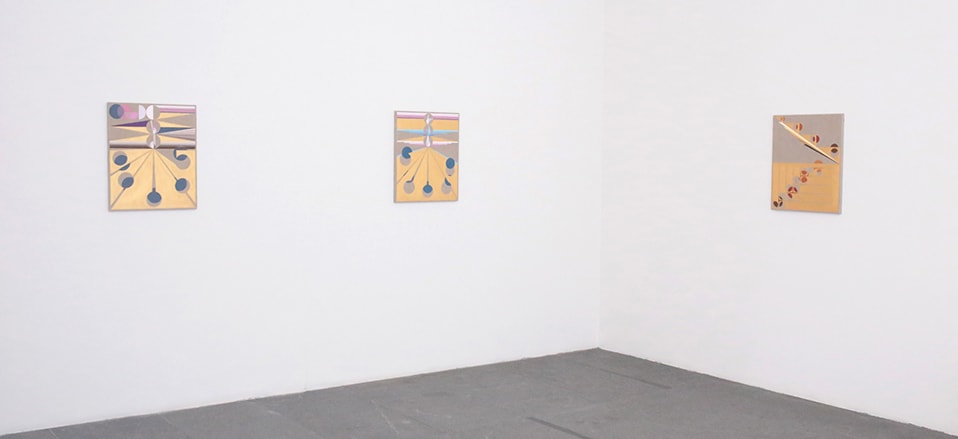
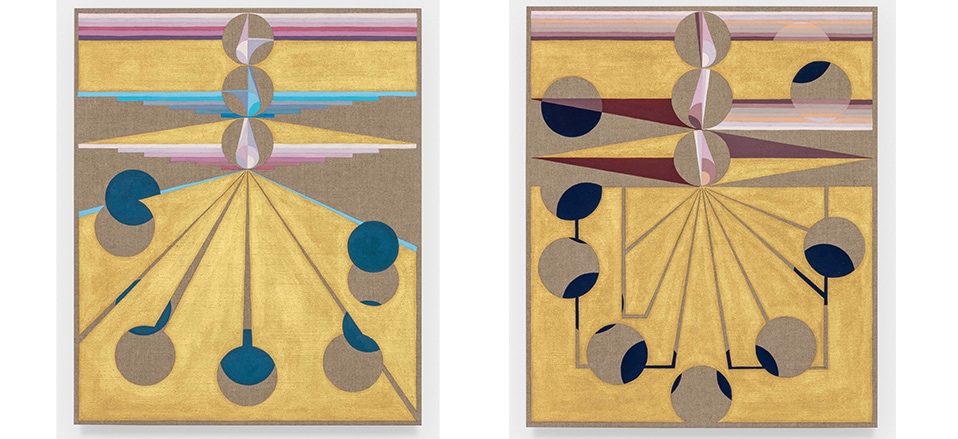
Eamon Ore-Giron created the expansive mosaic project entitled People’s Instinctive Travels: Homage to The Tribe. Based on six, original oil on linen paintings, Ore-Giron worked with fabricator Mosaicos Venecianos de México to translate his paintings into twenty-four glass mosaic panels that adorn the northbound and southbound platforms at the Bay Parkway station in Brooklyn.
Ore-Giron visualizes the world as abstract forms and shapes, and envisions the interaction and interplay of these shapes as a reflection of societal dynamics. This exchange between forms and his use of geometries symbolizes the ways in which people of different communities –such as those surrounding the Bay Parkway station– negotiate their relationships with each other and new places, a process of reinvention and creation.
The twelve mosaic panels on each platform reference the corresponding journey. As commuters travel southbound towards Coney Island, Ore-Giron’s designs reference the natural world, with fluid arcs and warm colors evoking the feelings one might have when going to the beach. The northbound platform mosaics mimick the movement of gears and the mechanics of the human-made world, conjuring feelings of New York’s ecstatic urban environment.
People’s Instinctive Travels: Homage to The Tribe originates from Eamon Ore-Giron’s “certain nostalgia for global modernism,” wherein “public works meant to create a kind of civic mindedness and unity.” His dynamic visual language references this unity, combined with the timelessness of indigenous and craft traditions. It is Ore-Giron’s hope that these mosaics will offer subway riders a space to see the world anew through the shapes, forms, colors, and movements of these artworks.
Text: Metropolitan Transportation Authority Arts & Design
Images: People’s Instinctive Travels: Homage to The Tribe (2018) © Eamon Ore-Giron, NYCT Bay Parkway Subway Station. Commissioned by Metropolitan Transportation Authority Arts & Design. Photos: Peter Peirce.
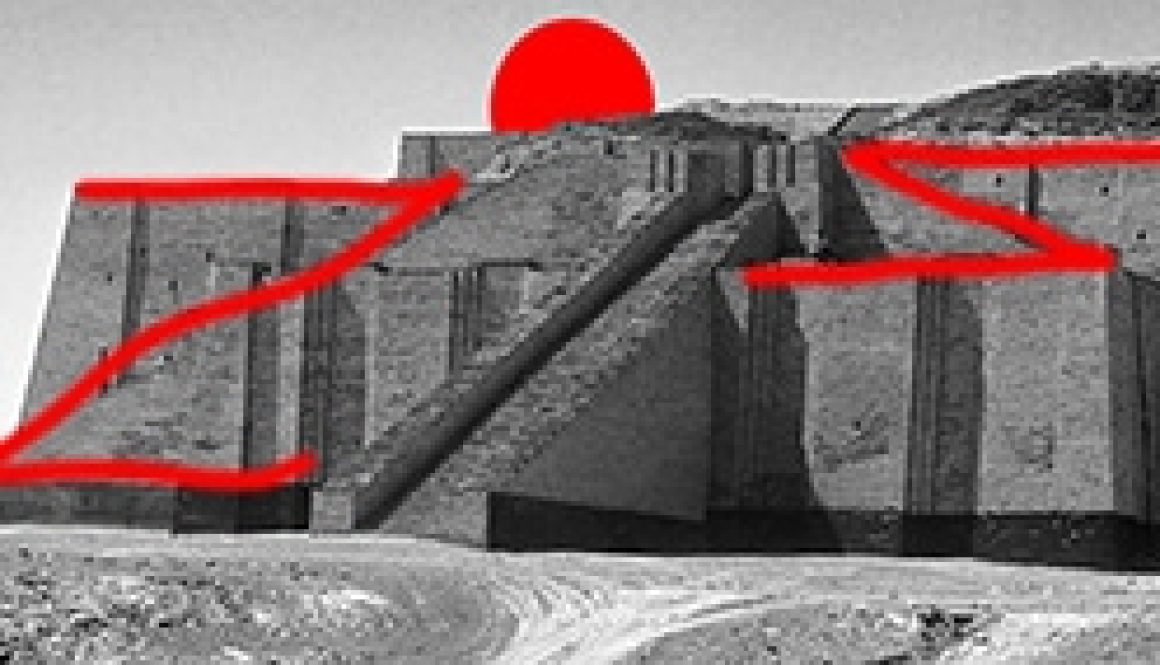
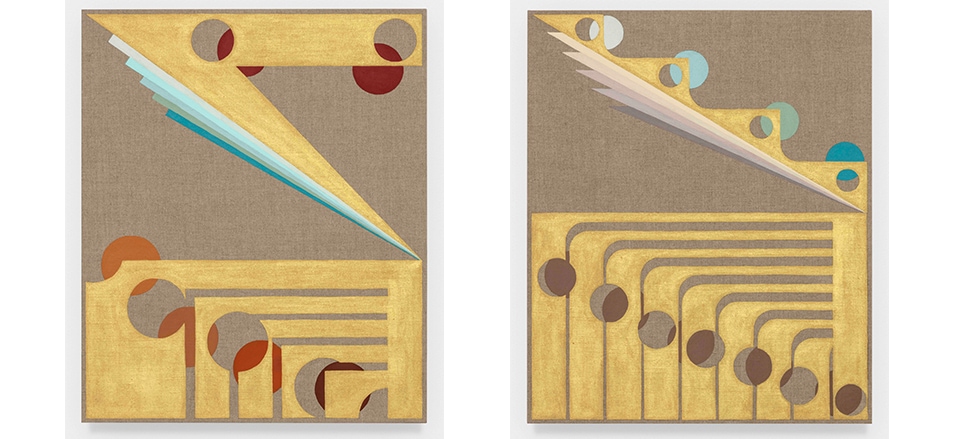
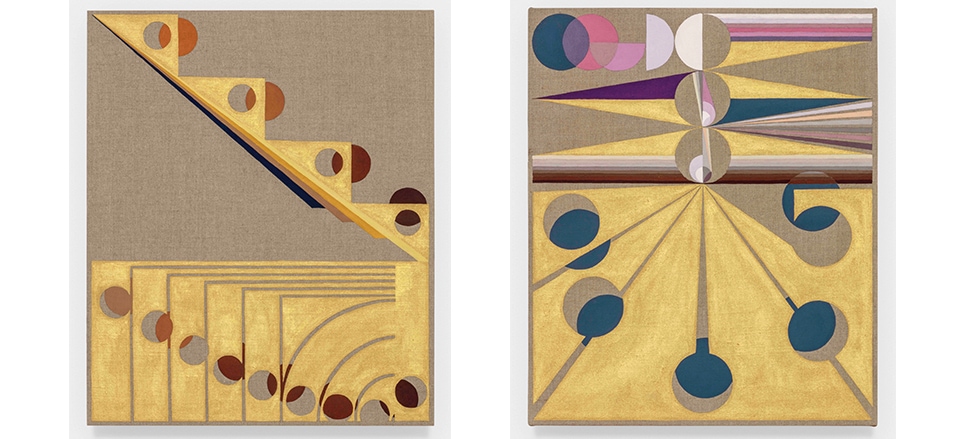
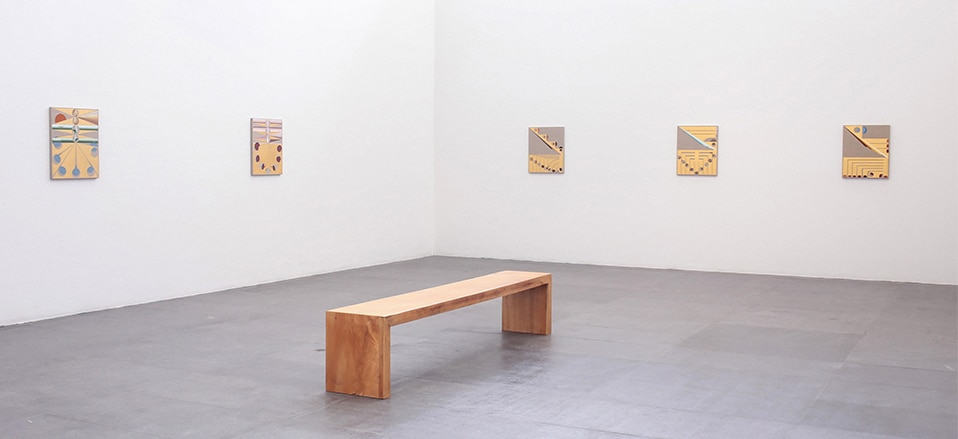
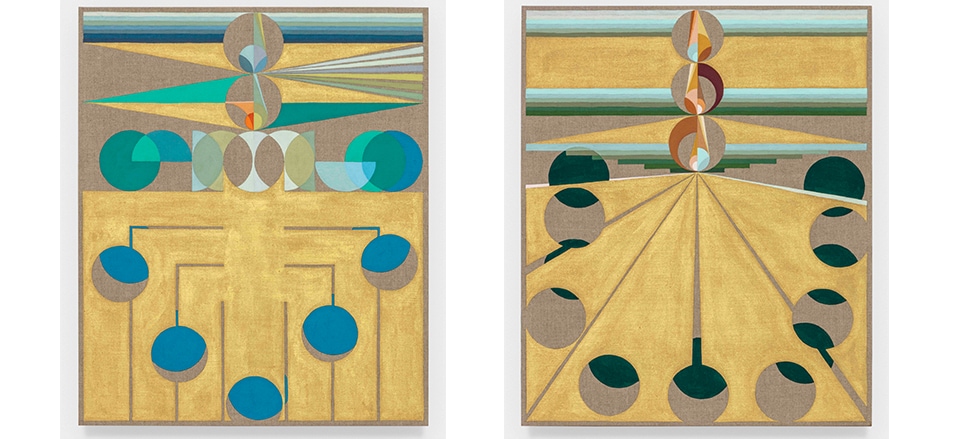
Eamon Ore-Giron’s most recent artwork is at display in his solo exhibition Ziggurat/Zigurat, showing at Páramo from January 31st to April 3rd, 2020.




Interrogatorio Inverso – Press

INTERROGATORIO INVERSO
Miguel Calderón
January 31 | April 3, 2020
Miguel Calderón: Interrogatorio Inverso
January 31, 2020 | April 3, 2020
Opening: Friday, January 31, 2020, 8:00 pm
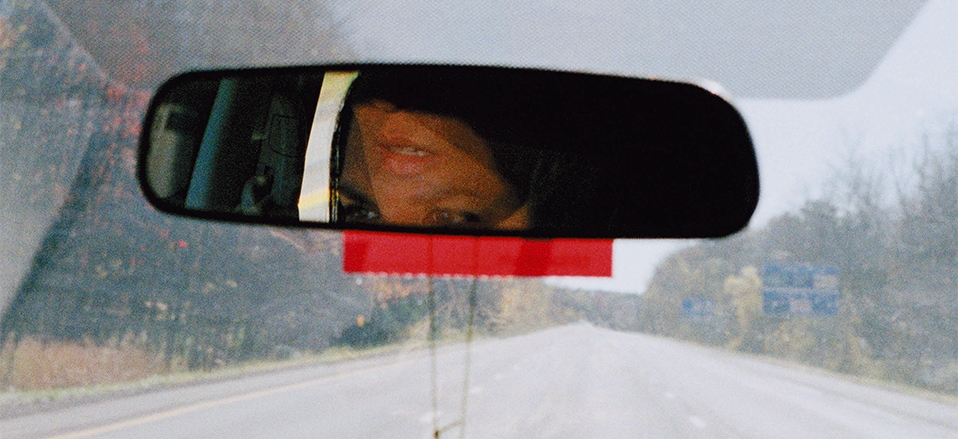
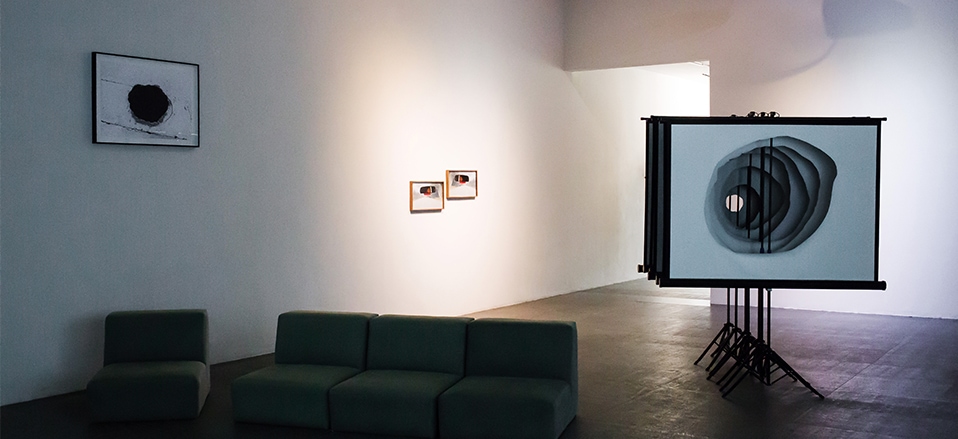
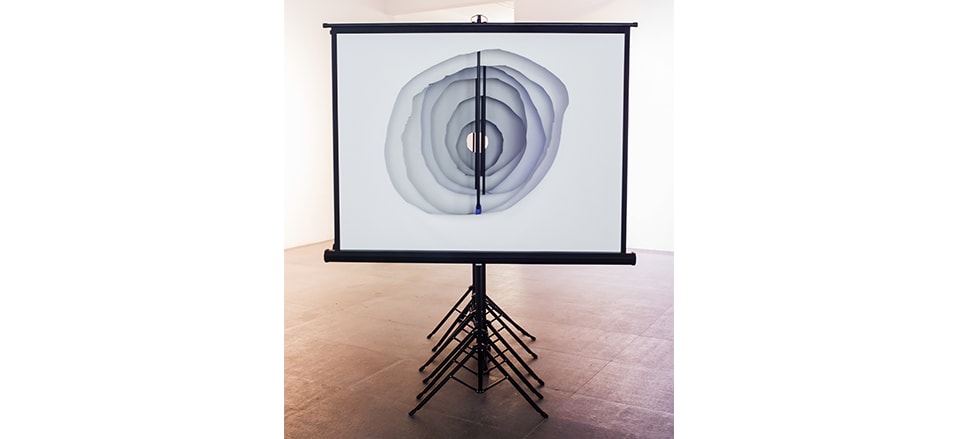
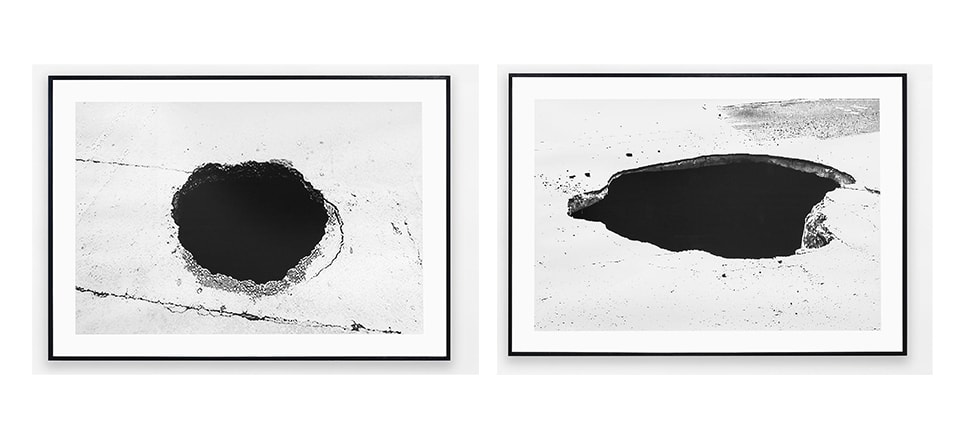
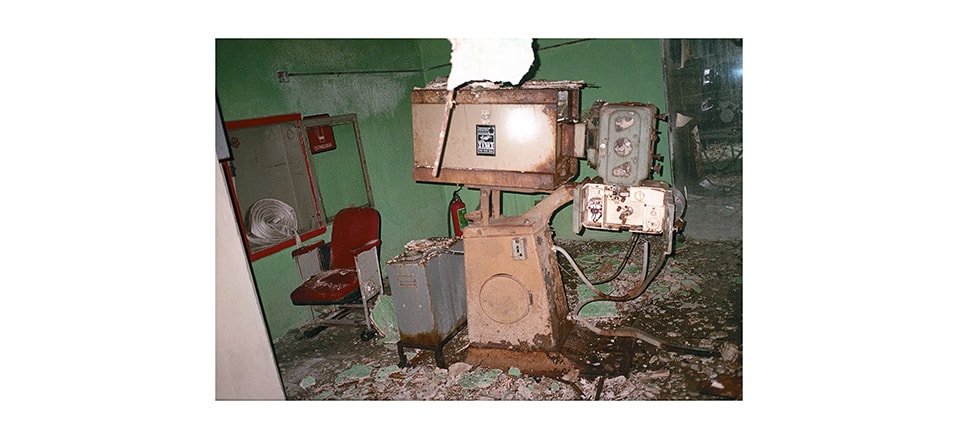
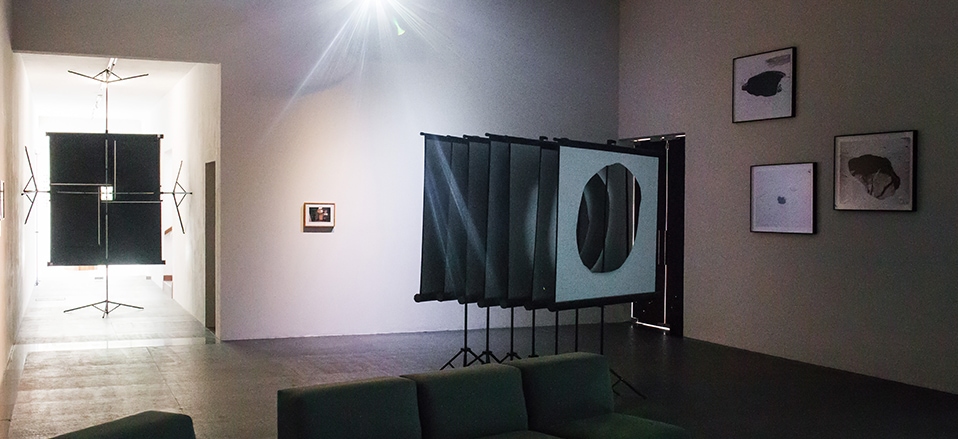
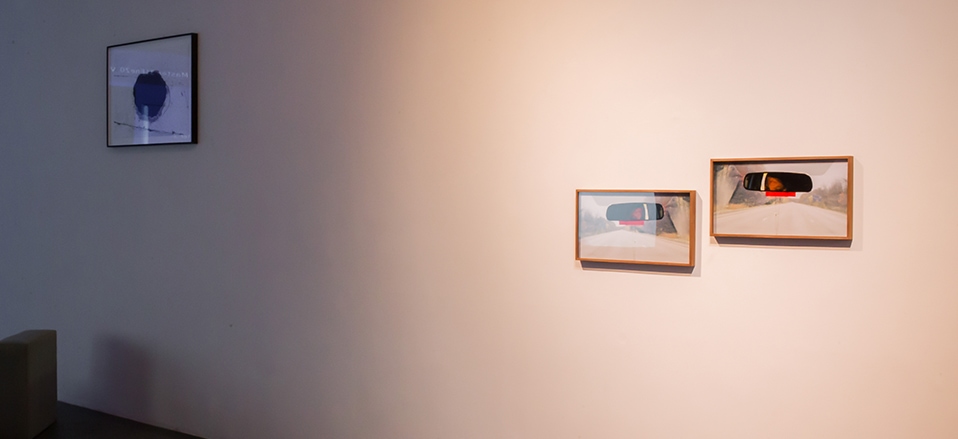
Páramo and kurimanzutto present the exhibition Interrogatorio Inverso [Inverse Interrogation], by Miguel Calderón. Interrogatorio Inverso is a group of works in which Calderón explores themes such as the free association of images, perception, the workings of memory, and the mass production and dissemination of news images. The artist combines these issues with his characteristic way of creating narratives based on his encounters with real persons who have undergone extreme experiences.
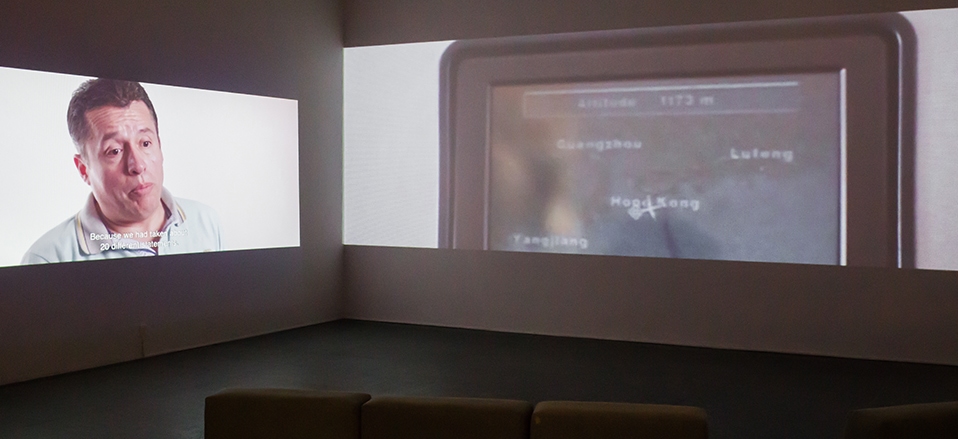
The central piece of the exhibition is an interview with the former director of Interpol Mexico, in which he narrates some of the most outstanding cases of his career. His eloquent language, humor and physical presence create a sense of being in front of a character from a police novel that is constantly confronted by existential questions. On a parallel screen, Calderón adds footage extracted from various news archives that are part of the collective unconscious and that are linked to the events described during the interview. The exhibition includes other pieces associated with the idea of images multiplied through communications media.
Interrogatorio Inverso is the fourth show of the program entitled Impasse 2019-2020, a project by Daniel Guzmán. Impasse is designed to reactivate and strengthen ties with the local contemporary art scene through a selection of artists, both Mexican and foreign, who have made their careers in Mexico.
About the artist
Miguel Calderón (Mexico City, 1971) explores a broad range of themes, from violence and corruption in Mexico, to youth and family dynamics, to the supernatural. However, his work is unified by an ever-present sense of theatricality, questioning the fine line between reality and fiction.
Frequently cast from the perspective of an outsider, he highlights the macabre complexity of man’s position in the universe deftly weaving together mockery, foolishness, social critique and sincerity of emotion. He creates works from a mashup of vernacular references, employing a variety of media, including video, photography, sculpture and painting.For Calderón, it is important that art be accessible; he came of age as an artist in Mexico during the 1990s, when he was a key figure in the development of a young alternative art scene in Mexico.
Calderón received his BFA from the San Francisco Art Institute in 1994. He has been the recipient of the Cisneros Fontanals Art Foundation Grant & Commissions program (2013), The MacArthur Fellowship for Film and New Media (2000), and the Bancomer/Rockefeller Fellowship (1995).
Recent major solo exhibitions include: Independientemente de con quien duerma, Fototeca Latinoamericana (FoLa), Buenos Aires (2017); Miguel Calderón: Color Bleed, Rochester Art Center, Rochester, New York (2012); Miguel Calderón, solo project, Casa América, Madrid, Spain (2010); Conversations with a Tropical Vulture, with George Kuchar, Yerba Buena Center for the Arts, San Francisco (2010); Bestseller, Panorámica, Museo Tamayo, Mexico City (2009); Ridiculum Vitae, La Panadería, Mexico City, Mexico (1998). The artist has also exhibited in numerous group shows, at the following institutions: Museo Jumex, Mexico City (2015); The Galleries at Moore, Moore College of Art and Design, Philadelphia (2015); Museo Amparo, Puebla, Mexico (2014); Los Angeles County Museum of Art, Los Angeles, California (2014); The Foundation Cartier, Paris, France (2013); Museo Universitario de Arte Contemporáneo (MUAC), Mexico City, Mexico (2011); The Museum of Contemporary Art, San Diego, California (2011); Museo Universitario del Chopo, Mexico City, Mexico (2010); Museum Moderner Kunst (MUMOK), Vienna, Austria (2009); National Gallery of Art, Warsaw, Poland (2007); Museum of Contemporary Art, Chicago, United States (2007); PS1 Contemporary Art Center, New York, United States (2002), among others.
Calderón has participated in various biennials, including: 7th Internationale Photo- Triennial, Esslingen, Germany (2007); Bussan Biennale, Bussan, Korea (2006); Sharja Biennial 7, Sharjah, United Arab Emirates (2005); Yokohama Triennale of Contemporary Art, Yokohama, Japan (2005); ARCO, Madrid, Spain (1998).
Calderón currently lives and works in Mexico City, Mexico.
Páramo would like to extend its gratitude to kurimanzutto, Tequila 1800 Cristalino and UBS for their collaborative support. Miguel Calderón thanks Emilio Azcárraga Jean and Televisa for their contribution providing audiovisual material for the realization of this work.
For further information, please contact: archivo@paramogaleria.com Press enquiries: media@paramogaleria.com / +52 33 3825 0921
Ahora imagino cosas

AHORA IMAGINO COSAS
Talk
Bruno Gruppalli, Carlos Maldonado & Carlos Velázquez
November 29, 2019
AHORA IMAGINO COSAS
Bruno Gruppalli (visual artist), Carlos Maldonado (visual artist) and the writer Carlos Velázquez.
Friday, November 29, 2019, 7:00 pm. Hidalgo 1228, Colonia Americana 44160, Guadalajara, Mexico.
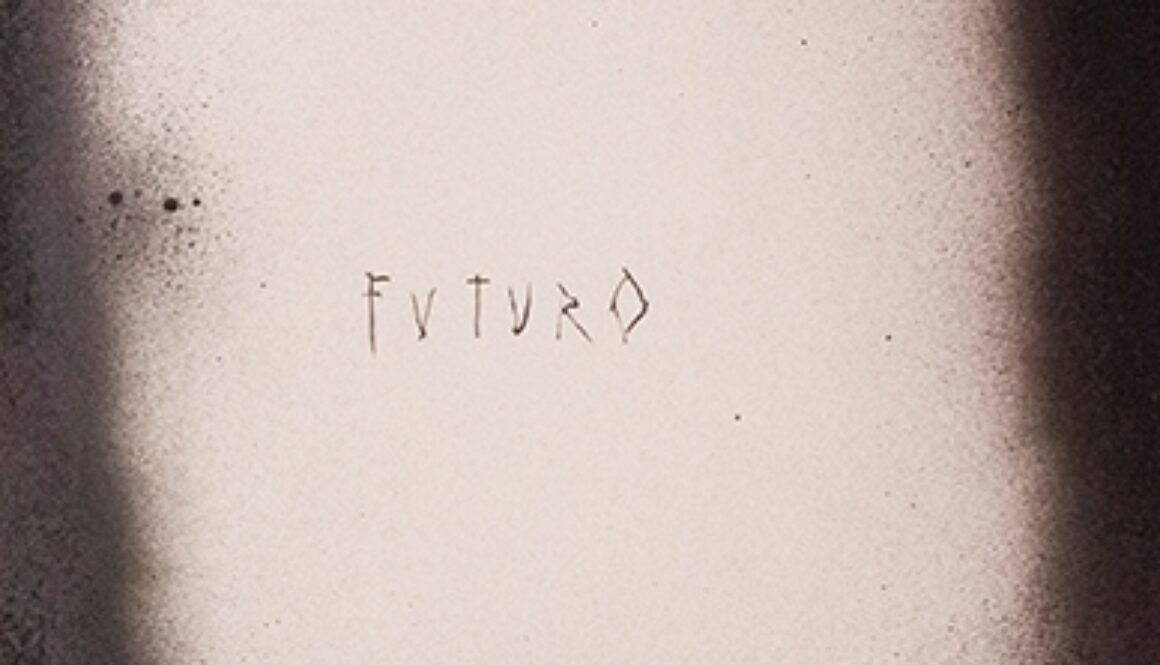
Talk offered by the artists Bruno Gruppalli (visual artist), Carlos Maldonado (visual artist) and the writer Carlos Velázquez (author of La Biblia Vaquera, Aprende a amar el plástico, among others).
As part of the Impasse program, curated by Daniel Guzmán, a conversation will tale place about the exhibition Algo me está haciendo, by the artist Bruno Gruppalli, which addresses the exhibition itself and its relationship with literature, music and other ideas.
Páramo would like to extend its gratitude to Tequila 1800 Cristalino for their collaborative support.
TAGS: #BrunoGruppalli #Algomeestahaciendo #Ahoraimaginocosas #Paramo